Polyendocrine Metabolic Ovarian Syndrome PMOS/PCOS symptoms and the diagnostic criteria
Common Signs and Symptoms of PCOS/PMOS
Polycystic Ovary Syndrome (PCOS) is a common hormonal condition that can lead to irregular menstrual cycles, unexplained weight gain, excess hair growth, and challenges with fertility. At The Links Clinic in Edmonton, Dr. Sam Azer understands that PCOS affects every woman differently and can deeply impact your quality of life. That is why we take a highly personalized approach to your care, focusing on your specific symptoms and long-term health goals. Whether you are looking to manage frustrating daily symptoms, regulate your periods, or seek expert guidance on your fertility journey, our team is dedicated to providing you with an effective, evidence-based treatment plan. We are here to help you understand your body, balance your hormones, and regain control of your health in a supportive environment.
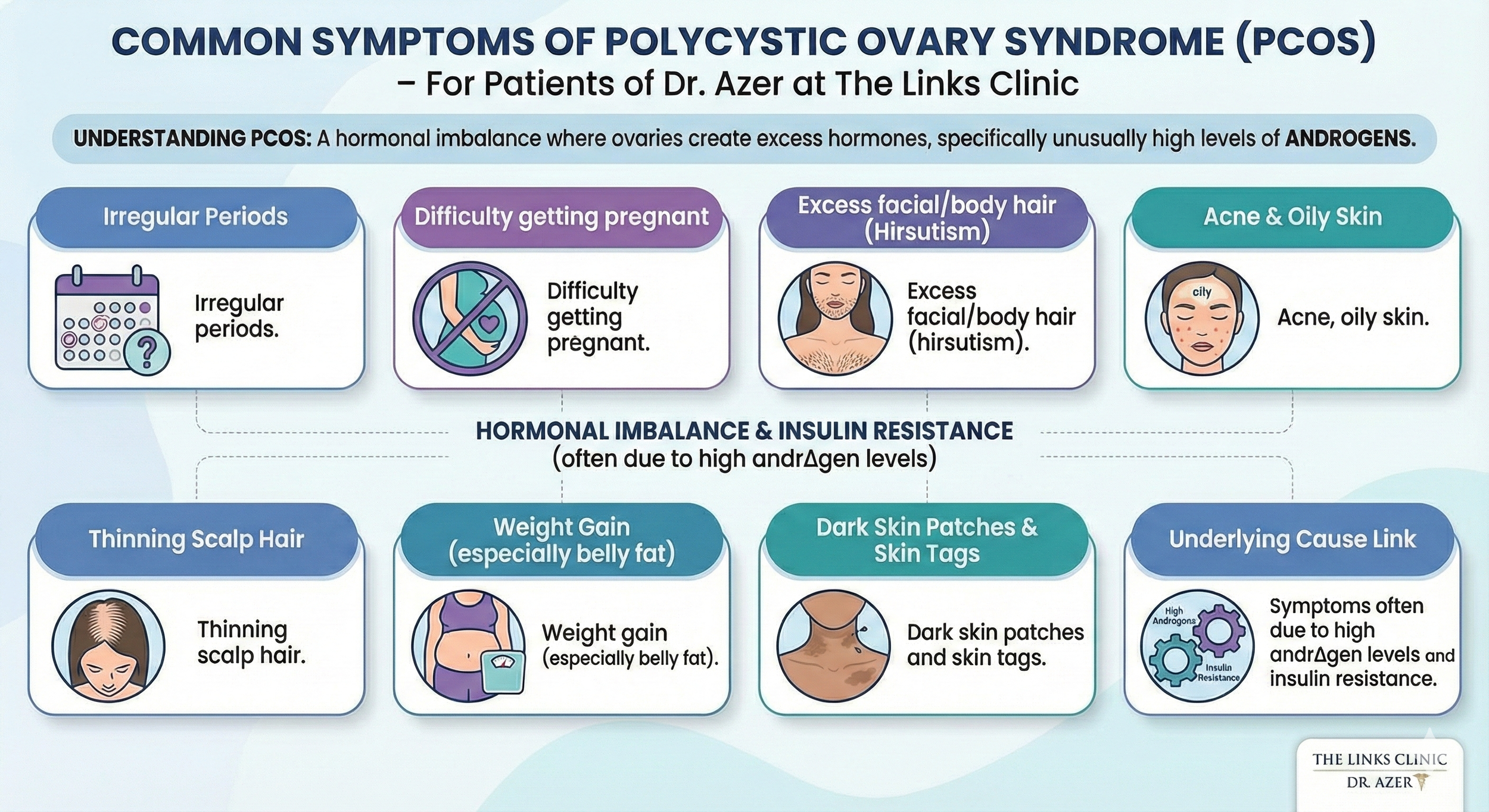
Because PCOS affects hormones and metabolism, symptoms can vary widely from woman to woman. Some individuals may experience mild symptoms, while others face more significant challenges. The most common signs include:
Irregular Periods: Infrequent, unpredictable, or prolonged menstrual cycles are often the most noticeable sign.
Excess Hair Growth (Hirsutism): Unwanted, coarse hair appearing on the face, chest, abdomen, or back.
Acne or Oily Skin: Persistent breakouts, particularly along the jawline, lower face, or chest.
Weight Changes: Unexplained weight gain or significant difficulty losing weight, often carrying extra weight around the abdomen.
Thinning Hair: Hair loss or thinning on the scalp.
Fertility Challenges: Difficulty conceiving due to infrequent or absent ovulation.
How is PCOS Diagnosed? (The Rotterdam Criteria)
There is no single blood test or imaging scan that definitively diagnoses PCOS. Instead, Dr. Azer utilizes the internationally recognized Rotterdam Criteria to evaluate your health. To receive a diagnosis of PCOS, a patient must meet at least two of the following three criteria (and other potential causes must be ruled out):
Irregular or Absent Ovulation: You experience irregular, infrequent, or completely absent menstrual periods.
Elevated Androgen Levels: You have higher-than-normal levels of androgens (often called "male hormones"). This can be identified through a blood test or through physical signs like excess hair growth or severe acne.
Polycystic Ovaries on an Ultrasound: A pelvic ultrasound reveals enlarged ovaries or ovaries containing many small, fluid-filled follicles (often mistakenly called cysts) surrounding the eggs.
Note: The name "Polycystic Ovary Syndrome" can be misleading. You do not actually need to have visible cysts on your ovaries to be diagnosed with PCOS, provided you meet the first two criteria.
Understanding the Four Subtypes of PCOS
Because a PCOS diagnosis requires meeting just two of the three Rotterdam Criteria, the condition can look incredibly different from one woman to the next. In the medical community, we categorize these different combinations into four distinct "phenotypes" or subtypes. Identifying your specific subtype is a critical step in creating a treatment plan that actually works for your body.
Type A: Classic PCOS (Severe)
What it is: This is the most comprehensive presentation of the syndrome. Women with Type A meet all three diagnostic criteria: irregular or absent periods, elevated androgens (causing excess hair or acne), and polycystic ovaries on an ultrasound.
What it means for you: This subtype is most strongly associated with insulin resistance and metabolic challenges, making targeted nutrition, lifestyle adjustments, and specific medical management highly beneficial.
Type B: Classic PCOS (Normal Ovaries)
What it is: Women with Type B experience irregular periods and signs of high androgens, but their ovaries appear completely normal on an ultrasound.
What it means for you: This is a perfect example of why the name "Polycystic Ovary Syndrome" can be confusing. You can still experience the hormonal and metabolic impacts of classic PCOS without having the characteristic follicles on your ovaries.
Type C: Ovulatory PCOS
What it is: Women with Type C have elevated androgens and polycystic ovaries visible on an ultrasound, but they experience regular, ovulatory menstrual cycles.
What it means for you: Because you have regular periods, fertility may be less impacted compared to other subtypes. However, you may still struggle with frustrating symptoms like unwanted hair growth, acne, or weight management.
Type D: Non-Hyperandrogenic PCOS (Mild)
What it is: Women with Type D experience irregular periods and have polycystic ovaries on an ultrasound, but they do not have high androgen levels (meaning little to no excess hair growth or severe acne).
What it means for you: This is generally considered the mildest form of PCOS. It typically has a lower risk of severe insulin resistance and metabolic syndrome, but regulating the menstrual cycle and supporting fertility remain primary goals.
Your Personalized Care Plan At The Links Clinic, we do not believe in a "one-size-fits-all" approach to women's health. By carefully evaluating your symptoms, bloodwork, and ultrasound results, Dr. Sam Azer will identify your specific PCOS subtype. From there, we will work together to build a comprehensive plan—whether that involves lifestyle modifications, medical management, or targeted fertility support—to help you achieve optimal health and well-being.